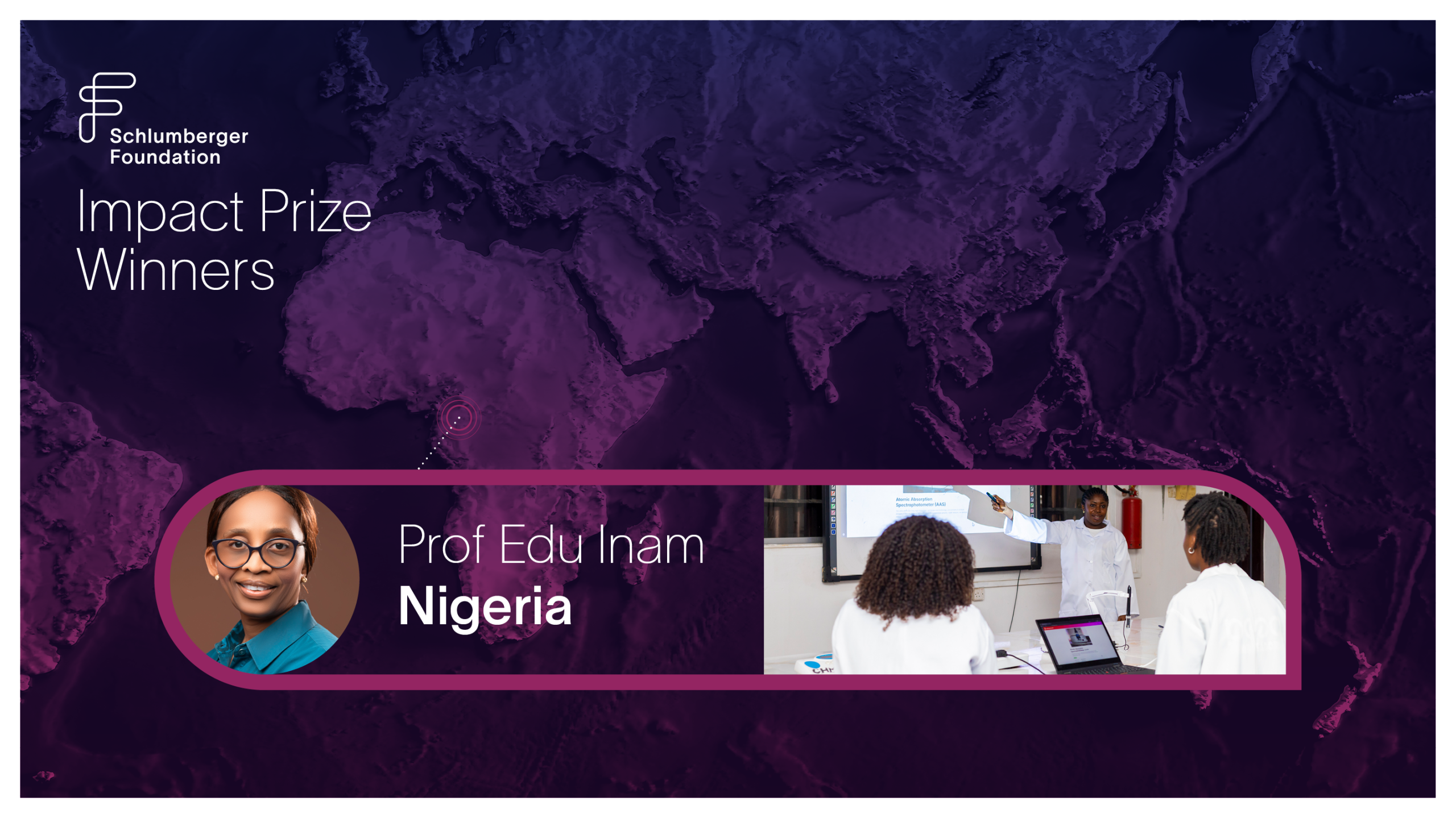
Professor Edu Inam’s Map to the Machines That Make Science Work
Long before Professor Edu Inam began mapping Nigeria’s scientific equipment, she learned to make scarce resources stretch. Born during the Nigerian Civil war, she grew up in an extended household of grandparents, uncles, aunts and cousins. Her father was a civil servant and her mother an elementary-school teacher. As the eldest of six children, Edu understood that sharing was how the family endured. Yet one resource her parents treated as non-negotiable was education.
Her father hoped his first child would become a doctor, a respected route out of poverty. But chemistry changed the plan. At school, Mr. Obineanne, a formidable chemistry teacher known among students as “Mr. Terror,” made the class memorize a chemistry textbook. Somewhere inside that exercise, fear gave way to fascination with the laws and equations beneath the natural world. Later, she watched the Apollo missions on the family’s black-and-white television, captivated by the scientists behind them. She imagined leading a scientific project capable of solving a problem that mattered to her country.
At the University of Uyo, Prof. Edu earned a B.Sc. in Chemistry, followed by an M.Sc. in Analytical Chemistry. The master’s programme was prolonged partly by limited access to research equipment. By then a mother of three, she could accept a place at Loughborough University only because her sister offered to care for the children. There, under the supervision of Professor Peter Warwick, she pursued a Ph.D. in Nuclear and Radiochemistry. Her research focus shifted later, during postdoctoral work in South Korea, where she moved into Environmental Chemistry. It was less a departure from her earlier training than an application of it to problems closer to home: particularly water quality, pollution and waste valorisation in Nigeria’s oil-producing Niger Delta.
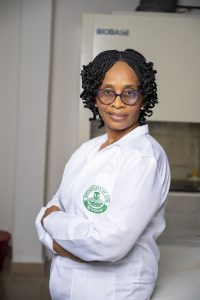
Her doctorate took roughly the same time as the master’s, but for a very different reason: the tools did not stand between her and the work. “Everything was in place,” she remembers.
“The laboratories, instruments and infrastructure were there. All I had to do was work.”
Years later, that work brought Edu and her students to a rural Nigerian community. They collected nearly 200 water samples in response to local health concerns and travelled about 50 Kilometers to the laboratory they needed. The students had largely raised the money themselves.
They arrived carrying the samples. The instrument was not working. Edu remembers the disappointment first, then the anger. Experiments fail and hypotheses collapse; that uncertainty is part of science. This was different. They had not been defeated by the science. They had been stopped before the science could begin. The broken machine exposed a wider problem. Sometimes instruments existed, but researchers did not know where they were, whether they worked, who managed them or how to request access. For those who could afford, samples were sent for analysis to laboratories in institutions as far as South Korea, South Africa or United Kingdom while useful machines maybe sitting elsewhere in Nigeria.
In 2018, at a gathering of Nigerian researchers who had trained abroad and returned home, equipment access surfaced repeatedly as an obstacle. Edu was asked to lead a working group. Its first question was almost embarrassingly simple: what if the instrument a researcher needed was already nearby? That question became LabEquipment.ng, a searchable platform showing what equipment exists, where it is located and whom to contact. Launched publicly in 2021, it had, by the end of 2025, brought together 22 institutions, more than 200 pieces of equipment, over 3,000 searches and interactions, and more than 550 users.
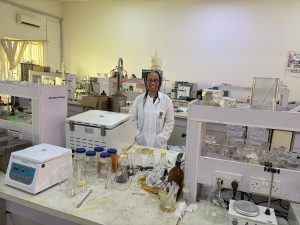
The database solves more than inconvenience. Institutions can share costly machines, avoid unnecessary duplication and see where investment is most needed. Researchers can plan experiments around functioning instruments. Underused equipment can serve more scientists. And students can recover something harder to measure: time. That matters particularly to Edu. She has watched postgraduate research extend because students cannot complete laboratory analysis. For young women, those delays can collide with expectations around marriage and motherhood. Making one machine easier to find can change more than an experiment; it can change the sequence of a life.
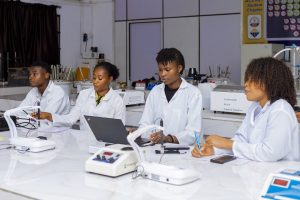
The Schlumberger Foundation’s relationship with Edu predates the platform. It is the Faculty for the Future programme that supported her post doctorate , while its 2018 Nigeria outreach convened the gathering in which an individual frustration became a shared project. Now, the Faculty for the Future Impact Prize is helping LabEquipment.ng move from a useful platform to nationally adopted research infrastructure. The Prize will support improvements to the platform, mobile access, the onboarding of more institutions, and clearer systems for researchers to request equipment and laboratory services.
The goal is not simply a larger database. It is a more connected research ecosystem, one in which a student’s experiment is less likely to end at the door of a laboratory with a broken machine. She remembers laboratories overseas where the lights stayed and researchers could work for as long as the experiment demanded. For Edu, the contrast was revealing her scientific ability had not changed, but the conditions around it had. With fewer barriers between an idea and the tools needed to test it, research could move faster.
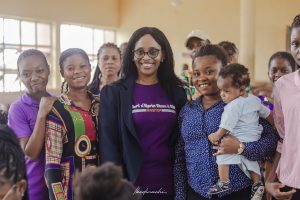
Edu’s larger dream is physical: a research centre where African scientists can find advanced instruments, training and uninterrupted laboratory time without first needing an opportunity abroad. Her ambition now is that the next scientist should not have to leave home to find out.