
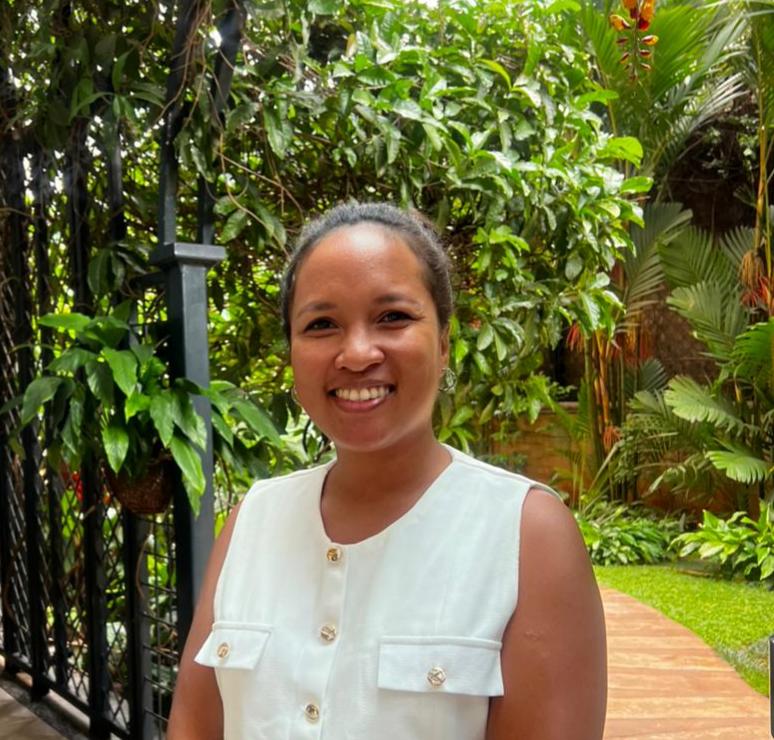
Ravaka Felandranja Andriatsitohaina
- Country of Origin: Madagascar
- Home University: University of Toamasina
- Host University & Country: University of Udine - Italy
- PhD Title: Microplastic Pollution in Soil: Impacts on Microbial Life, Ecosystem Functions, and Heavy Metal Interactions – Microbial Strategies for Biodegradation
- Year of Completion: 2028
PhD Overview
Microplastics (MPs) are persistent pollutants in agricultural soils, where they interact with heavy metals and disrupt microbial activity, soil structure, and nutrient cycling. This project aims to clarify how MP characteristics (size, shape, polymer type, and aging) influence microbial and metal dynamics in both temperate and tropical soils. By combining controlled and comparative experiments, it will identify microorganisms capable of colonizing and degrading common polymers. The findings will provide a scientific foundation for sustainable soil management and strategies to reduce plastic pollution in Madagascar.
Keywords: microplastics, soils, heavy metals, biodegradation, soil health, Madagascar.
Sustainability Goals
- Life on Land
- Responsible Consumption and Production
- Zero Hunger
About Me
I am a Malagasy researcher and lecturer working at the intersection of soil science, environmental pollution, and microbial ecology. My research focuses on understanding how microplastics behave in agricultural soils, how they interact with soil microorganisms and heavy metals, and how these interactions may alter essential soil functions.
My proposed research at the University of Udine aims to address important knowledge gaps by integrating microplastic characterization, heavy-metal dynamics, microbial activity, and biodegradation processes under controlled and field-relevant soil conditions. By combining experimental approaches with advanced analytical and microbiological methods, I seek to generate mechanistic evidence on microplastic transformation and identify microbial processes with potential for environmental remediation.
The scientific value of this work lies in moving beyond the simple detection of microplastics toward understanding their transformation, ecological interactions, and potential mitigation. In the longer term, I aim to adapt and translate these approaches to agricultural and environmental contexts in Madagascar, where scientific evidence on emerging soil contaminants remains limited. Through the Faculty for the Future fellowship, I seek to strengthen my expertise in advanced soil and environmental research, develop international scientific collaborations, and build research capacity that can contribute to sustainable soil management, environmental protection, and evidence-based agricultural policies in Madagascar.