
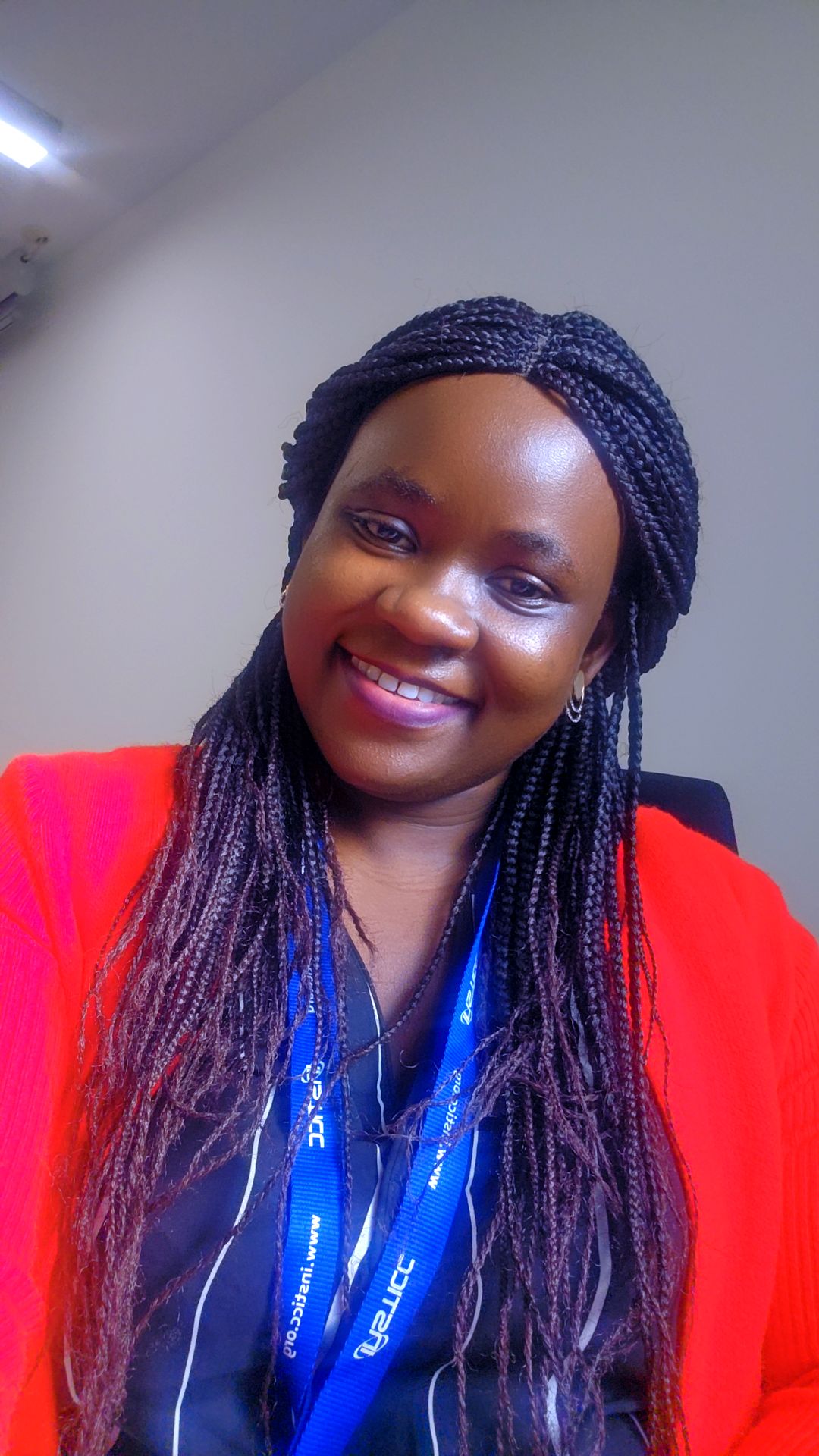
Nuru Nabuuso
- Country of Origin: Uganda
- Home University: Makerere University
- Host University & Country: Universitat Pompeu Fabra - Spain
- PhD Title: Sparse and Interpretable-by-Design Models for Explainable AI: A Human-in-the-Loop Framework for Trustworthy AI Systems, with Applications to Childhood Malnutrition.
- Year of Completion: 2028
PhD Overview
I am a PhD researcher in Explainable Artificial Intelligence at Pompeu Fabra University, supervised by Prof. Vladimir Estivill-Castro. I develop transparent, trustworthy, and inherently interpretable AI systems for health, with a particular focus on childhood malnutrition. My central aim is AI whose decision-making is understandable by design, so that healthcare professionals, policymakers, and other stakeholders can interpret, validate, and act on its predictions with confidence.
My work connects interpretable modelling with real-world deployment. On the modelling side, I have developed a human-centred framework for constructing oblique decision trees that stay auditable through sparsity and parallel-coordinate visualisation, along with greedy algorithms for building sparse linear regression models in high-stakes domains. On the deployment side, I study trust in AI systems, examining what makes an explanation genuinely usable by clinicians in low-resource settings.
Sustainability Goals
- Good Health and Well-being
- No Poverty
- Zero Hunger
About Me
I’m a Ugandan PhD researcher in Explainable Artificial Intelligence at Pompeu Fabra University. I build AI for healthcare that people can question, starting with childhood malnutrition. I believe AI used in high-stakes decisions must be understandable by design, so that clinicians, policymakers, and affected communities can see its reasoning, test it, and act on it. My background in computer science and health informatics gives my work one guiding test: would a health worker in a rural clinic actually trust and use this? That question took my research from publication to practice through XplainHealth. It includes an offline screening app for community health workers and a dashboard that explains every stunting-risk prediction in plain language. My goal is to start a responsible AI lab for health in Uganda. The lab would show that transparency, local relevance, and strong performance can go together, and it would train the next generation of African researchers to build AI for their own communities.