
From Potential to Progress: Dr. Nova Pishesha’s Call to Build the Next Generation of Scientific Innovators
At 19, Novalia “Nova” Pishesha arrived in San Francisco from Singosari, a small district in East Java, with about $4,000 and no obvious path into the institutions that would later define her career. Much of the money would disappear into tuition before she’d even found her footing. The rest had to cover a new life. She found work, enrolled at City College of San Francisco and began applying for every scholarship available to an international student.
It was not the beginning one might expect for a scientist who would eventually reach the Massachusetts Institute of Technology (MIT), Harvard University, co-found biotechnology companies and become the first Indonesian Assistant Professor at the Boston Children’s Hospital and Harvard Medical School. But in retrospect, the uncertainty matters. Nova’s life has been shaped by what happens when talent encounters opportunity, and by how easily the absence of one can obscure the other.
Her father ran a toy shop; her mother never completed elementary school. Neither had travelled the academic path their daughter eventually would, but both insisted that she take school seriously. Nova excelled, competing in Indonesian Mathematics Olympiads and imagining, for a time, that she might become a doctor.
What changed was not her interest in medicine, but her understanding of where medicine begins. Illness was close at hand in Singosari: relatives and friends lived with lupus and cancer, while dengue and malaria interrupted ordinary life. She began wondering what a doctor could do when the necessary treatment did not exist. “If there is no medication,” she remembers thinking, “there is not much a doctor can do.”
Biological engineering offered another possibility: helping create the treatments themselves.
Strong grades carried her from the City College of San Francisco to the University of California, Berkeley on a full scholarship. Her Professors encouraged a PhD she had barely imagined. She applied to the MIT Biological Engineering PhD program despite having less research experience than many candidates and was accepted.
At MIT and the Whitehead Institute, the next door opened. Under mentors including Professor Harvey Lodish and Professor Hidde Ploegh, Nova saw her work on engineered red blood cells travel farther than the academic paper. Her work in the laboratory could become a patent; a patent could underpin a biotechnology company; and a company could gather the capital and expertise required to move an idea towards patients. “That was my first exposure,” she says, “to the possibility of what you do in a lab, actually becoming a biotech spin-out company.”
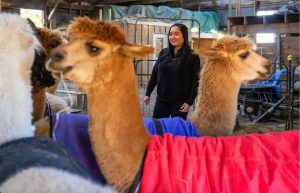
She would eventually make that journey herself. As a Harvard Junior Fellow and then as an Assistant Professor at the Boston Children’s Hospital and Harvard Medical School, her research has made use of alpaca-derived nanobodies (small antibody fragments) to engineer immune responses with greater precision. Technologies emerging from that work are what have helped form the scientific foundations of Orthrus Therapeutics and Cerberus Therapeutics, two biotechnology companies she co-founded.

The lesson learned, was not that academic science was insufficient. It was that discovery and delivery require different ecosystems.
In Boston and Cambridge in the United States of America, those ecosystems sit unusually close together. Scientists encounter founders and investors; professors create companies; graduate students learn about intellectual property and venture building alongside experimental science. Entrepreneurship becomes something a scientist can imagine doing.
But the ecosystem she experienced in Boston was not one she saw replicated in Southeast Asia. She saw talent without the same surrounding architecture. A 2026 World Intellectual Property Organization (WIPO) study found rapid growth in Indonesia’s scientific output and intellectual-property activity, but limited translation of scientific knowledge into market outcomes. The Asian Development Bank similarly describes a large startup ecosystem still constrained by early-stage financing and talent-development gaps.
The stakes are also medical. Indonesia accounted for about 10 percent of global tuberculosis cases in 2024; dengue caused more than 257,000 cases and 1,400 deaths that year. The question, for Nova, is whether more Southeast Asian scientists can move from studying such problems to building the diagnostics, therapeutics and companies that respond to them.
“The scientists are there,” she writes. “The infrastructure is not.”
Her answer is the Future Southeast Asian Scientist initiative, or FSAS, designed to give early-career scientists access to the knowledge that surrounded her at MIT and Harvard: intellectual property, market analysis, regulation, investment, mentorship and venture building. Its first Indonesian cohort will bring together 20 to 30 scientists, with at least half of the places intended for women, before the programme expands regionally.
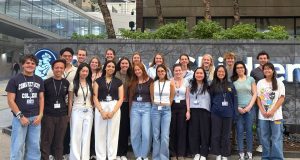
Nova is not beginning from zero. Over the previous five years she has lectured to more than 2,000 students and early-career scientists across Indonesia, Singapore and Taiwan and formally mentored more than 40 trainees. FSAS turns those individual encounters into something more deliberate: an ecosystem rather than a series of fortunate introductions.
That distinction is personal. Again and again, Nova’s own trajectory changed because someone widened what seemed possible; the Regents’ and Chancellor’s Scholarship that made Berkeley affordable, professors who encouraged a PhD, mentors who showed her that scientists could build companies.
The Schlumberger Foundation was part of that journey too. Faculty for the Future funded her doctoral training at MIT. Years later, its Impact Prize is helping her create for others what the programme once helped create for her: access before the outcome is guaranteed.
Nova calls the Prize “kind of like a ticket home.” It will help deliver the first FSAS cohort and give the programme the credibility needed to attract universities, partners and future support.
Asked why she keeps turning towards Indonesia despite building her career in the United States, she answers simply: “I’m Indonesian, right? If it is not you going to build your country, I don’t think anyone else will.”
Twenty years from now, she says, success will be measured in people: scientists and engineers she trained, novel biology they discovered, medicines they developed, companies they built, and others they mentored.
Her own life changed because, before the patents, companies and Harvard title existed, people and institutions decided she was worth betting on.
FSAS is her attempt to make sure the next bet on a Southeast Asian scientist does not require quite so much luck.