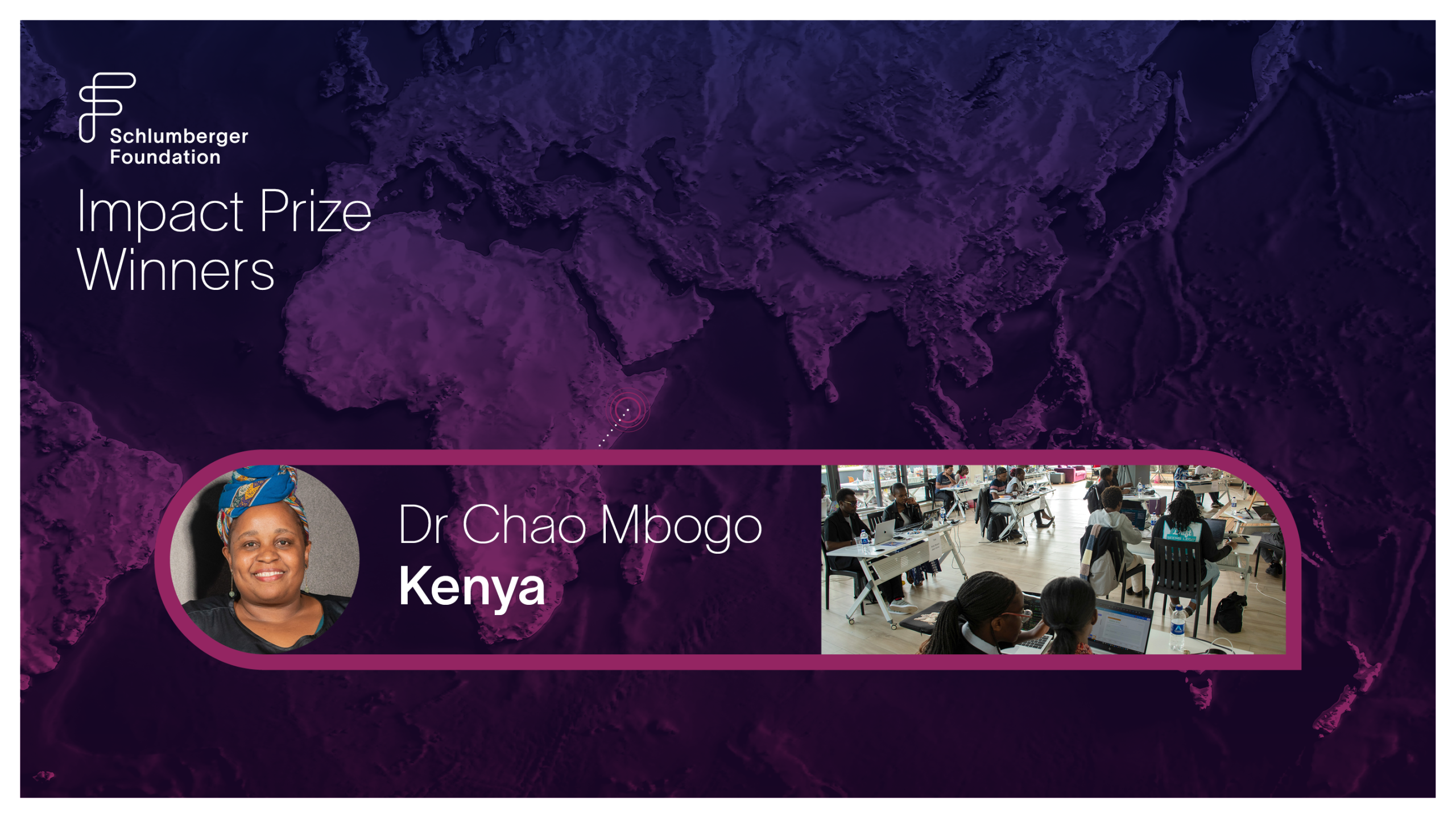
How Dr. Chao Mbogho Is Building Pathways Beyond the Computing Classroom
Occupying the first place had always been familiar territory to Dr. Chao Mbogho. At Migori Primary School in western Kenya, she learned early to associate excellence with a number on a report card. This instinct was reinforced at home, where achievement was visible before it was demanded: her father taught at a teachers’ college, her mother was a banker, and high standards were part of the family’s everyday grammar.
St. Mary’s Lwak Girls’ High School complicated that certainty. Surrounded by girls every bit as ambitious as she was, Chao could suddenly finish anywhere between first and sixth place at the end of the term. The experience unsettled the equation she had made between rank and ability. Competition still sharpened her, but achievement became less about staying ahead of everybody else and more about continuing to grow. Just as important were the adults who paid attention to that growth. She remembers Sister Martha at St. Mary’s Lwak Girls’ High School, who was an extremely demanding but attentive teacher. For Dr. Chao, discipline and care were not opposites; the people who pushed her hardest also paid the closest attention, an idea she would meet again with mentors later in life and build into her own approach to teaching. There was however still a question no mentor or report card had answered: where might her own abilities lead?
Although she had been offered a place at Kenyatta University to study Nutrition and Dietetics, another programme caught her attention at Kenya Methodist University: Mathematics and Computer Science. Mathematics was the reason she applied; computer science was the unknown, since she had never met a computer scientist and could not imagine such a career. It did not stay unknown for long: programming introduced her to the same logic she already enjoyed in mathematics, and the unfamiliar half of her degree became the field in which she would build her career. She graduated with first-class honours, but achievement did not quiet her questions, and an MSc in Computer Science at the University of Oxford, St Catherine’s College gave her the demanding environment she was seeking. Back in Kenya, teaching undergraduate programming at Kenya Methodist University, she met a different gap: bright, motivated students with limited access to computers and little guidance on translating what they were learning into opportunity. Knowing how to write code did not teach someone how to apply for a scholarship or navigate the professional world outside university.
Her PhD in Computer Science at the University of Cape Town opened a new dimension of that concern: how to meet students where they are. She investigated how programming could be taught through the device students were most likely to own, the mobile phone. The research reinforced a principle that became central to her thinking: start with people, then build technology around their needs. Her supervisors, Professor Hussein Suleman and Professor Edwin Blake, further deepened this perspective. When she returned to Kenya Methodist University after the PhD, she came back to a familiar classroom with a broader way of seeing it. The questions from students had not disappeared. If anything, they had become clearer: they were asking not only how to learn the material, but how to move beyond it; how to find scholarships, prepare for interviews, build confidence and navigate the opportunities that university alone did not explain. In 2016, Dr. Chao began turning those conversations into KamiLimu, a wordplay on Elimu Kamili, meaning “whole education” in Kiswahili. Its eight-month programme that complements university computing with professional development, scholarship preparation, industry-relevant skills, responsible innovation, community engagement and, now, Responsible AI literacy.
Barbara, one of KamiLimu’s early students, arrived with a frustration. She was studying computing, but much of the learning around her seemed geared toward completing assignments rather than developing the confidence, curiosity, and practical judgment needed to apply that knowledge beyond the classroom.
She had watched classmates search online for answers simply to finish coursework, but she wanted something different: to understand the material deeply enough to make it her own and to discover what opportunities that knowledge might unlock. KamiLimu gave her that. Through mentorship and exposure beyond the syllabus, she began connecting what she was learning technically with the wider world of research, professional networks, and career opportunities.
When an opportunity arose to apply to the Grace Hopper Celebration, one of the world’s leading gatherings for women in computing, Dr. Chao helped her prepare a strong application.
Barbara was accepted, and years later, she remains an active member of the KamiLimu community. Barbara’s challenge was personal, but the gap it revealed was larger. The World Bank estimates 50 to 55 percent of Kenyan jobs will require digital skill by 2030, and Kenyan employers consistently rank IT among their most sought-after skills, alongside communication and critical thinking.
The task is not producing more graduates who can use technology but helping them develop the judgement to turn knowledge into opportunity. That is the space KamiLimu was built to occupy.
Since 2016, it has supported 344 students, 177 women and 167 men, from 32 Kenyan universities. Alumni have gone on to Rhodes, Mandela Rhodes and Erasmus Mundus scholarships, into the Microsoft Africa Development Centre and Outreachy’s internships. Those numbers make KamiLimu look settled and without challenges. However, building it has often felt far less certain: there were periods when funding was stretched almost to nothing, and Dr. Chao found herself asking whether keeping KamiLimu alive was still worth it.
At some of its most difficult moments, one of the people she drew strength from was also the person who had shaped her most profoundly: her mother. For Dr. Chao, her mother was more than a parent; she was her first and most influential mentor. A banker by profession, she exemplified a rare combination of strength and compassion: tenacity without hardness, kindness without weakness, and a gift for making people feel they mattered. Those qualities would later become deeply embedded in Dr. Chao’s vision for KamiLimu. The organisation’s defining values, People, Safe Spaces, Depth, Structure, and Play, reflect the spirit and principles by which her mother lived.
Her death in May 2025 therefore carried a particular weight. Dr. Chao lost one of the strongest guiding forces in her life at the same time that she had become a source of guidance for so many others. Yet the loss also revealed something quietly profound: much of what her mother had given her was already living on, in the way KamiLimu treated its students as humans first, in its commitment to seeing the person behind the performance, and in the belief that those who benefited from support should, in turn, make room for someone else.
The Schlumberger Foundation’s Faculty for the Future Impact Prize now gives Dr. Chao an opportunity to test whether that infrastructure can travel further. The funding will support KamiLimu’s eleventh cohort, strengthen alumni tracking and help promising student innovations continue beyond graduation. It will also support a pilot with Riara University exploring whether parts of the curriculum can become a credit-bearing course for final-year computing students. If that works, mentorship moves from programme to system: universities provide the institutional setting while KamiLimu contributes curriculum, mentors and evaluation, letting an approach that currently works with small cohorts reach hundreds more students through existing institutions.
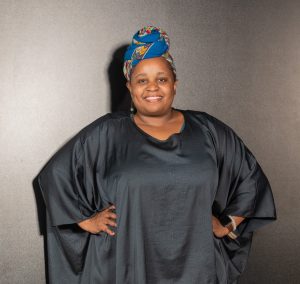
For Chao, that evolution also requires something more personal; learning to let go. She has spent years close enough to KamiLimu to know what is moving, who is responsible and where attention is needed. A seven-member board is being constituted to assume office in January 2027, part of a deliberate effort to build governance and systems capable of carrying the organisation without its founder at the center.
In some ways, KamiLimu has been preparing for this transition for years. Its peer-mentorship model was built on the idea that responsibility should not remain concentrated in a few hands. Former students return to guide those coming behind them; knowledge, confidence and responsibility move outward rather than stopping with the person who first provided them. For a founder who has spent years holding so much of the programme together, success increasingly means becoming less necessary to it. Her idea of legacy is simple: to “hold the ladder up” for others.