
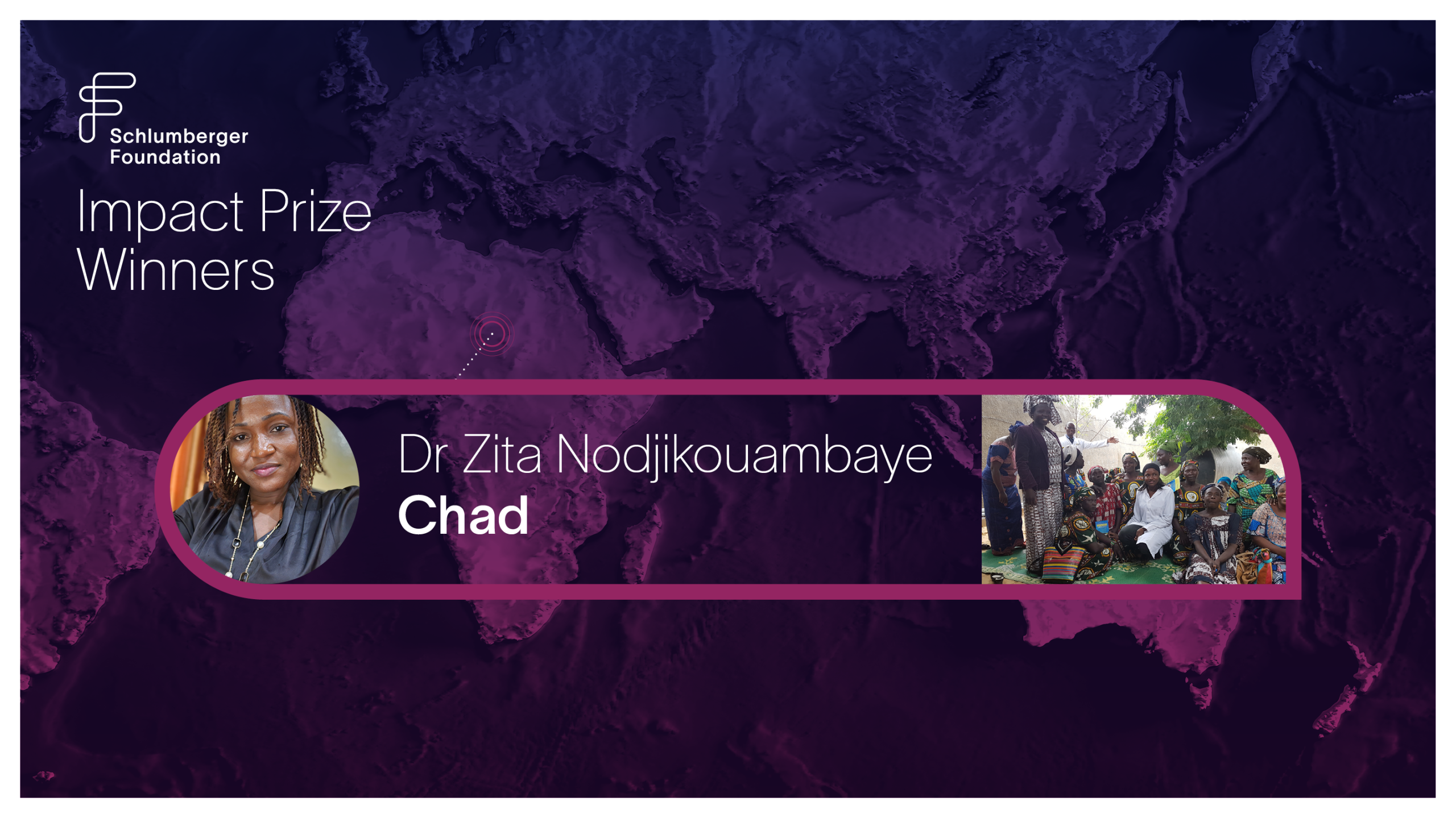
Making Early Detection a Reality for Women in Chad: Dr. Zita Aleyo’s Fight Against Cervical Cancer
For a year after her mother died, Amina lived with the fear that the same illness might be waiting for her. Her mother had bled for months before anyone in the family understood it as a medical problem. In Chad, unexplained illness can sometimes be interpreted through beliefs in witchcraft before medicine is sought. By the time her mother reached hospital in N’Djamena, Chad’s capital city, the cervical cancer was terminal. Amina understood, after that, what she was risking. But she also understood what screening meant: a speculum, a stranger’s hands, a room where she would be asked to expose herself. She had been told it hurt. So, despite knowing the risk, she waited. Then, one Sunday at church, she heard about a nearby clinic offering a different kind of screening. There, medical biologist Dr. Zita Aleyo Nodjikouambaye handed her a small self-sampling device.
“Is this?” Amina asked. “This is what will tell me?”
She hesitated, then agreed. A few minutes later she returned, the tension gone from her face. “It’s that easy? I didn’t even feel any pain.” That expression of surprise where dread had been, stayed with Dr. Zita. Her research would show that Chadian women could reliably collect their own samples for HPV testing. But the deeper lesson was already visible on that woman’s face: a test only works if a woman is willing to take it. Cervical cancer is among the most preventable cancers: the World Health Organization notes that screening can detect precancerous changes before they become life-threatening. Yet in Chad, fewer than one in ten eligible women has ever been screened. The problem is not only whether the science exists. It is whether women can reach it. For Dr. Zita, questions of access had begun long before she encountered cervical cancer in a laboratory or clinic. They stemmed from her own struggle to attain the education that would make a scientific life possible.
Before Dr. Zita knew what medical biology was, she knew something about the kind of work that would intrigue her. At the tender age of 12, growing up in Moundou, southern Chad, she became captivated by Sous le Soleil, a French television series whose characters included a doctor named Laure. What stayed with Zita was not simply the profession, but the way Laure listened to patients and inspired their trust. “Something lit up inside me,” she says, “and it never went out.” At home, another person was quietly helping her discover what she might be capable of. Her brother-in-law. During school holidays he would set mathematics and physics competitions between Zita and her siblings. She kept winning. He never declared her the cleverest, she recalls; instead, he kept creating opportunities for her to discover it for herself.

By the time she completed secondary school, medicine seemed a natural destination. But when she failed the entrance examination to the Faculty of Medicine at the University of N’Djamena, she looked for another path that could satisfy the same curiosity that had driven her since childhood. Medical Biology felt closest to medicine but also appealed to something more instinctive in her: the desire to understand why things happen, uncover what is hidden and search for answers through science. The field, however, was not available in Chad. Pursuing it would mean leaving the country. Her father said no. She did not argue; she had never disobeyed him. She simply stopped: no studying, no work. A blank year. Watching his youngest daughter sit still while her future did the same, eventually proved harder for her father to bear. A year later he called her in. “I trust you,” he said. “You have no right to fail.” She packed her bags. “Today, everyone talks about the right to fail,” she says. “Fail fast. Fail forward. I had none of that.” Then, without irony: “And somehow, that was the greatest gift he could have given me.”
Her studies took her first to Bamako, where she trained in Medical Biology, then to Burkina Faso for a master’s in Applied Biological Sciences, specializing in bacteriology and virology. In Gabon, she moved deeper into infectious disease, completing a master’s in Tropical Infectious Diseases and later a PhD in Biomedical Sciences with the same focus. Along the way, hospital placements brought her into close contact with women who resisted gynecological examinations or spoke openly about how uncomfortable and intrusive they found them. Dr. Zita began to wonder whether the examination itself was becoming a barrier to care. If so, why not remove it? Let the woman collect the sample herself. She returned to Chad with the necessary approvals, but the hospital where she chose to do her research, Mother and Child CHU (CHU de la Mère et de l’Enfant) located in N’Djamena, never gave her access. Three months of a six-month research window disappeared.
“I had the authorizations. I had the method. I had the women, somewhere in this city,” she recalls. “All I was missing was a door.”
In July 2017, Professor Damtheou Sadjoli opened one. He allowed her to conduct the study at his gynecology practice at the Cabinet Médical de Gynécologie Obstétrique La Renaissance Plus, in the Atrone neighborhood of N’Djamena. Dr. Zita recruited female participants for the study herself through churches, markets, radio stations and women’s associations. Three hundred came forward in two weeks; 253 were enrolled in her study; “Infection cervicale à papillomavirus humain (HPV) au Tchad : practicability and virological evaluation of genital self-sampling and molecular epidemiology of cervical HPV infections.” The results were striking. Ninety-six percent found self-sampling acceptable, while the method detected high-risk HPV with 95 percent sensitivity compared with clinician-collected samples. What many of the women valued, however, was more basic: privacy, comfort and control. The science had answered one question. The harder one came next: how do you turn a successful study into something ordinary women can use?

A self-sampling device alone cannot do that. Women must know screening exists. Someone must earn their trust. Samples need laboratories. Positive results need follow-up. Health workers need training. A woman who learns that something is wrong must have somewhere to go next.
Dr. Zita began building those pieces around the test. Through FAUCON Laboratory, which she founded, the work has grown to include molecular diagnostics, combined cervical and breast cancer screening, and the training of health workers. But proving that the model could work was only part of the challenge. The harder task was making that care available consistently, beyond individual campaigns and research settings.
That is where the Schlumberger Foundation’s Faculty for the Future Impact Prize becomes significant. Rather than funding another study, the Prize is helping Dr. Zita move the work from evidence into routine care, expanding the systems, people and reach needed to make screening more accessible to women across Chad. With the Prize, the project aims to screen at least 2,000 women and train 60 additional nurses, midwives and community health workers. It will also allow her to expand mobile screening into up to 20 neighborhoods spread across N’Djamena, from Farcha in the northwest to Walia and Ngueli in the South, and strengthen the diagnostic and referral system around them. For Dr. Zita, success is not a permanent project bearing her name. It is almost the opposite. She wants screening embedded in clinics close to communities, health workers able to continue without her, and the model eventually carried forward through Chad’s national cancer programme.
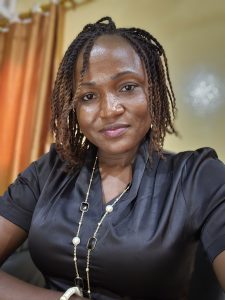
She still thinks about Amina, the young woman who visited the clinic with her mother. After seeing her mother’s cancer diagnosed too late, Amina spent a year avoiding her own cancer screening out of fear. What Dr. Zita remembers most is the change in her expression when she realised the test did not have to be frightening or painful. For one generation, knowledge had come too late. For the next, it had arrived in time. Dr. Zita cannot give Amina her mother back. Nor can screening promise that every cancer will be prevented or every life saved.
What it can change is when a woman knows. And sometimes the distance between tragedy and possibility is simply that: knowing while there is still time to act.