
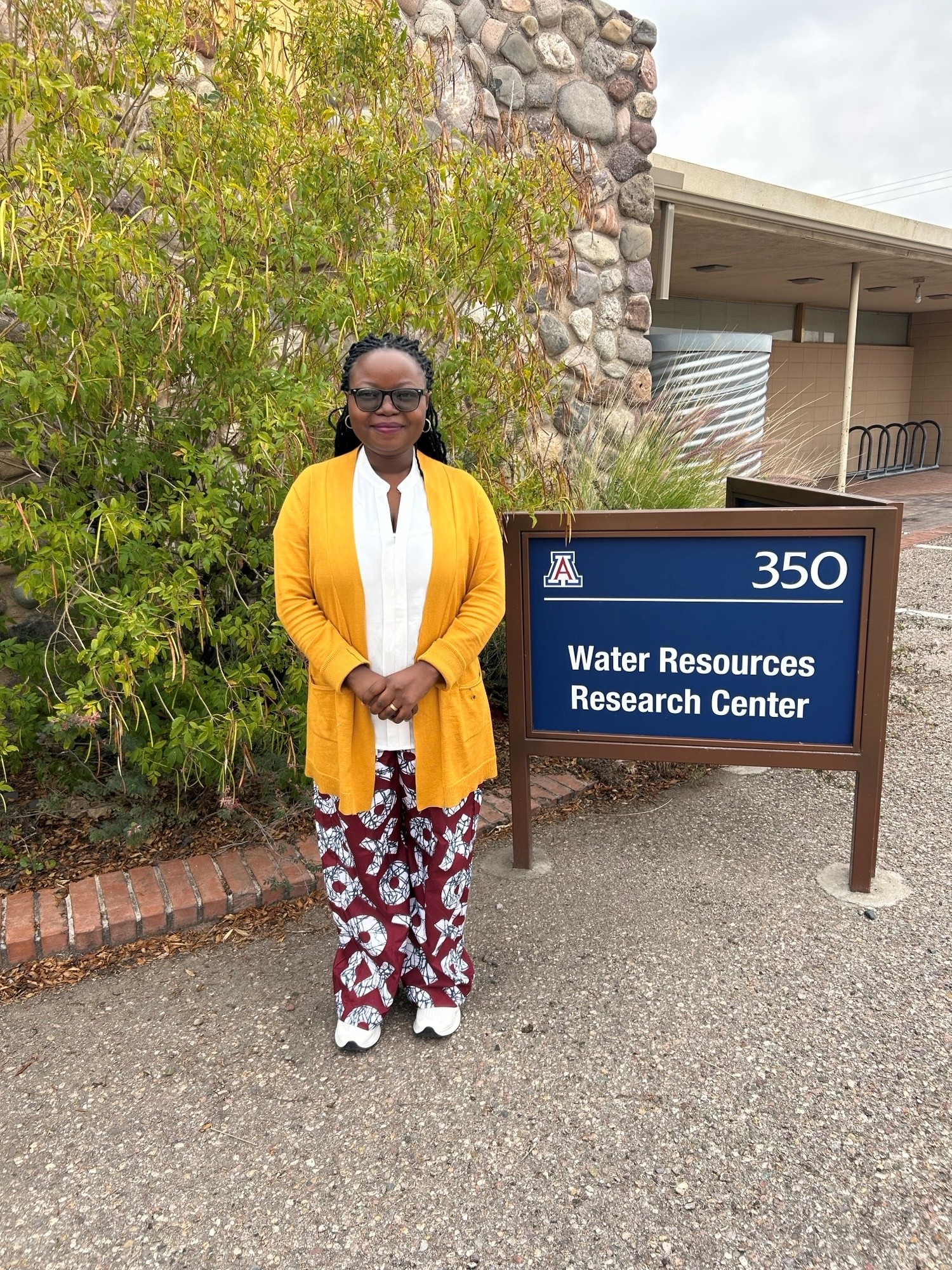
Anna Msigwa
- Country of Origin: Tanzania
- Home University: The Nelson Mandela African Institution of Science and Technology
- Host University & Country: University of Arizona - USA
- PhD Title: Hydrology and water resources Engineering
- Year of Completion: 2027
PhD Overview
My research focuses on climate-resilient water resources management, integrating hydrological and , remote sensing, GIS, machine learning, and climate data to understand and predict water-related risks. My work particularly addresses drought monitoring and early warning for agriculture, climate vulnerability and land-use change, and transboundary water governance. I develop data-driven decision-support approaches that connect scientific evidence with local knowledge, institutions, and practical adaptation strategies to support sustainable and climate-resilient water and agricultural systems.
Sustainability Goals
- Clean Water and Sanitation
- Climate Action
- No Poverty
- Zero Hunger
About Me
My research focuses on one central question: How can we use science, technology, and local knowledge to help communities better anticipate and manage water and climate risks?
I combine remote sensing, climate data, hydrological modelling, and machine learning to monitor and predict drought, floods, water-quality changes, and other climate-related risks. A major part of my work is translating these scientific advances into practical decision-support tools, such as the Smart Climate Advisor, which provides localized climate and drought information to support farmers and decision-makers.
I also work on the governance side of water security, particularly how institutions and countries can cooperate to manage shared water resources under a changing climate. My current research focuses on transboundary water governance and climate adaptation in the Lake Tanganyika Basin and other East African transboundary lakes.
Ultimately, my research brings together technology, environmental science, and governance to develop solutions that are not only scientifically robust, but also useful to the people and institutions making decisions about water and climate resilience.