
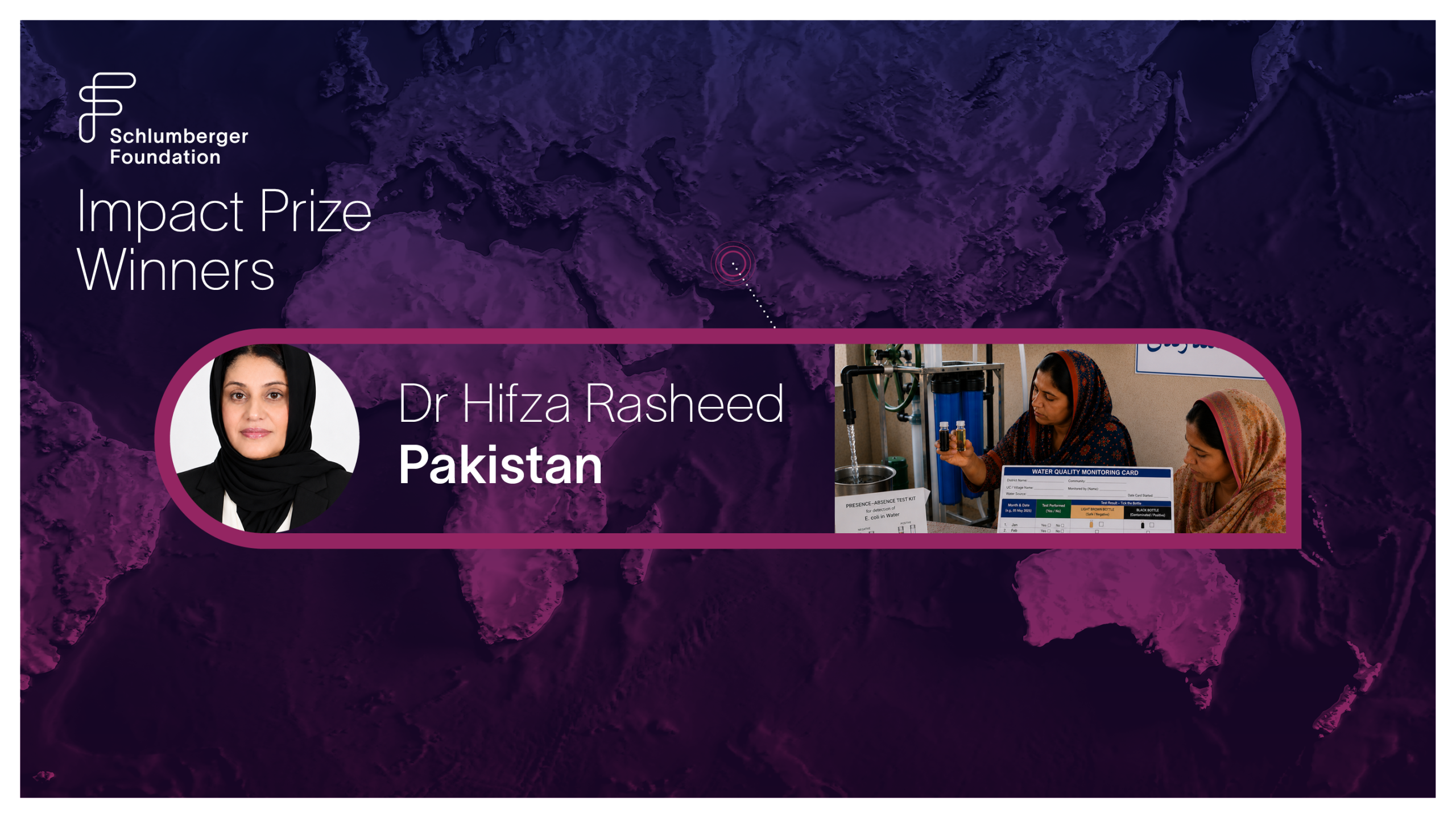
Transforming Floodwater into Safe Drinking Water: Inside Dr. Hifza Rasheed’s Community-Led Solution
During Pakistan’s 2022 floods, water seemed to erase the distinction between abundance and scarcity. Rivers overflowed, settlements disappeared beneath muddy currents, and millions were displaced. Yet in the camps and inundated villages, families still lacked the one thing surrounding them: water they could safely drink.
For Dr Hifza Rasheed, the contradiction was unbearable. She had seen versions of it before; after the 2005 earthquake, in flood camps in 2010, and whenever broken supply lines allowed sewage to mix with drinking water. Bottles and tankers arrived, but only for as long as relief systems could sustain them. “Water was everywhere,” she remembers of 2022, “but they were not able to drink that water.”
The question she put to her team was direct; why could the floodwater itself not be made drinkable?
Rasheed had been preparing to ask that question for most of her life. She studied agriculture at the University of Agriculture Faisalabad, then microbiology at Quaid-i-Azam University, before joining the Pakistan Council of Research in Water Resources in 2002. What drew her was not water as an abstract resource, but the evidence of its neglect. She remembers streams once clear enough for her to catch small fish by hand, and the distress of seeing waterways later choked with plastics, sewage and industrial waste.
During an exchange visit to the United States, a Native American guide offered her a sentence she would carry home: environmental rights and human rights are equal. That principle, water as an entitlement, not a favour, would go on to shape not just what Rasheed built, but how she designed it. For more than two decades, Dr. Hifza Rasheed has worked at the intersection of water and people; from groundwater and rivers to water quality, environmental health, water treatment technologies, climate resilience, water conservation, disaster response, and evidence-based water policy. Throughout her career, she has been driven by a simple belief: science has its greatest value when it translates into practical solutions that improve lives and strengthen water security. Her career broadened around that proposition, encompassing drinking-water quality, arsenic and microbial contamination, wastewater management, water conservation , antimicrobial resistance; and national water policy.
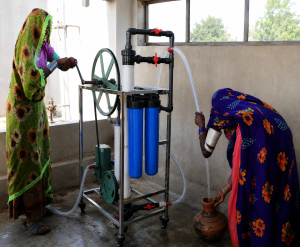
Water, she came to understand, sits beneath public health, food security, ecosystems and the stability of communities. The floods gave that broad expertise a practical test. Any useful system would have to treat highly turbid water, operate where electricity had failed, and be simple enough for residents to use without waiting for engineers or aid agencies. Rasheed and her team designed a hand-operated filtration unit, manufactured it themselves and deliberately left the design unpatented so it could be used more widely. The machine can also be adapted to solar or electrical power, but its defining feature is independence, even when the grid, roads and conventional supply systems fail, a person can still operate it by hand.
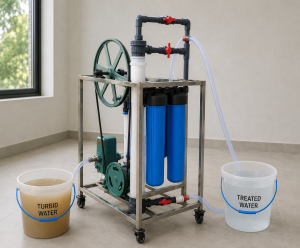
The filter is only one part of the model. Rasheed also developed and patented a low-cost microbial testing kit that allows trained residents to determine whether water is contaminated. She intends for communities to receive filtration systems, testing kits and training in safe storage, maintenance and emergency response. Selected residents, including women, teachers, health workers and young volunteers, will serve as Water Safety Champions, recording results and helping neighbours interpret them.
This model of local ownership is also a hedge against a familiar failure. Rasheed is wary of infrastructure that arrives with ceremony and is later abandoned. Communities, she says, are too often treated as recipients rather than stewards; once government or donor attention moves elsewhere, equipment fails and records disappear. Her project therefore asks something more demanding of both institutions and residents: that communities help select sites, monitor water quality, contribute to maintenance and understand the health consequences of unsafe water.
This is where Rasheed’s idea departs from conventional disaster relief. A tanker delivers water; her model tries to transfer authority. “A community which can test, treat and manage its own water,” she says, “can be a resilient community.” The technology matters, but so does the knowledge that allows people to trust it, manage it and continue using it after a project team has left.
The early record is concrete. Five units were installed during the 2022 floods, 31 more during the floods of 2025, and another ten are serving communities outside emergencies. Two units were later installed in flood-prone Lalitpur, Nepal, suggesting that the design can travel beyond Pakistan. Together, the systems have served more than 3,500 households, while over 200 community members have been trained in water testing and safety. The next phase aims to establish functioning systems in 15 to 20 communities and train or engage between 500 and 700 people.
The resilience she asks of communities is one she has had to practice herself. During her PhD at the University of Leeds, a serious leg injury requiring surgery threatened to derail her studies. Despite the setback and the challenges of recovering far from home while raising a young family, she chose to continue. The injury did not slow her academic journey. She completed her PhD on schedule, conducted internationally relevant research that contributed to understanding childhood stunting in Africa. When she eventually returned after the PhD, she found herself rebuilding from almost nothing; few contacts, no active projects, and the familiar challenges faced when entering senior scientific spaces. She responded by setting new goals, assembling a team and making a point of supporting younger women through obstacles she knew well.
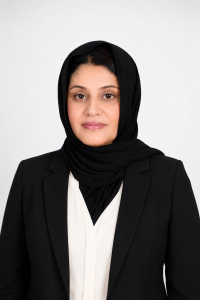
The Schlumberger Foundation’s Faculty for the Future Impact Prize arrived, she says, like “a breath of fresh air”: not only an award, but evidence that years of dedication and perseverance during difficult times had been seen.
It will allow her to test the community-resilience model more rigorously and make the case for adoption across flood-prone and energy-constrained regions.This experience shaped a phrase she often returns to: “two W’s”: water and women. Both, she argues, are routinely underestimated; both become powerful when given protection, knowledge and the chance to thrive.
Yet her deepest concern extends beyond any single project. She worries that people have grown accustomed to polluted streams, shrinking lakes and depleted groundwater, treating environmental decline as the inevitable price of modern life. She remembers when water bodies seemed alive. Through her work, she urges communities and governments to see them that way again; not as scenery or infrastructure alone, but as a shared inheritance on which future generations depend.