
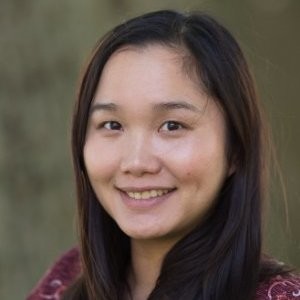
Novalia Pishesha, PhD
- Country of Origin: Indonesia
- Home University: Boston Children's Hospital and Harvard Medical School
- Host University & Country: Massachusetts Institute of Technology - USA
- PhD Title: Biological Engineering
- Year of Completion: 2018
PhD Overview
My research focuses on immune engineering: building molecular tools that direct the immune system with precision rather than suppressing it wholesale. Most treatments for autoimmune diseases such as multiple sclerosis, type 1 diabetes, and lupus broadly dampen immune function. They are rarely curative and leave patients vulnerable to infection. My laboratory aims to replace this blunt approach with one that targets only the specific immune cells driving disease.
During my PhD at MIT and the Whitehead Institute, I pioneered the use of engineered red blood cells to induce antigen-specific immune tolerance, work that prevented autoimmune disease in preclinical models and was licensed to Rubius Therapeutics. As a Junior Fellow of the Harvard Society of Fellows, I turned to nanobodies, small antibody fragments derived from camelids that are easy to engineer, stable, and inexpensive to produce. A single dose of an engineered nanobody carrying a myelin peptide and an anti-inflammatory drug both prevented and reversed paralysis in mouse models of multiple sclerosis, without impairing protective immunity.
Since 2024 I have led my own laboratory as an Assistant Professor at Harvard Medical School and Boston Children’s Hospital. We work in two directions: turning immunity off to treat autoimmune and allergic disease, and turning it on against infectious diseases including influenza and malaria. We also build imaging tools that let us watch immune responses in living organisms. Two biotechnology companies, Orthrus Therapeutics and Cerberus Therapeutics, have grown from this work.
Sustainability Goals
- Good Health and Well-being
- No Poverty
- Zero Hunger
About Me
I was born in Singosari, East Java, in a community with limited educational and medical resources. I watched autoimmune and infectious diseases shape the lives of people around me long before I had the language to describe them. That is what set me on the path to biomedical research.
My route was not a straight one. I started at City College of San Francisco, transferred to UC Berkeley for bioengineering, and completed my PhD in Biological Engineering at MIT, where the Schlumberger Foundation Faculty for the Future Fellowship supported me from 2013 to 2017. Today I am an Assistant Professor of Pediatrics at Harvard Medical School and Boston Children’s Hospital, where I lead a laboratory that engineers the immune system with precision to treat autoimmune diseases, allergy, and infection.
I carry the fellowship’s purpose forward in two ways. In the laboratory, I train scientists from backgrounds like mine and insist that ambitious science is open to them. Beyond it, I founded Future Southeast Asia Scientists and co-founded the Southeast Asian Biotechnology and Biomedical Association to help early-career scientists in Indonesia and the region turn their research into real-world impact at home.